

Alopecia Areata | What to do when you notice a bald patch


What's In This Article
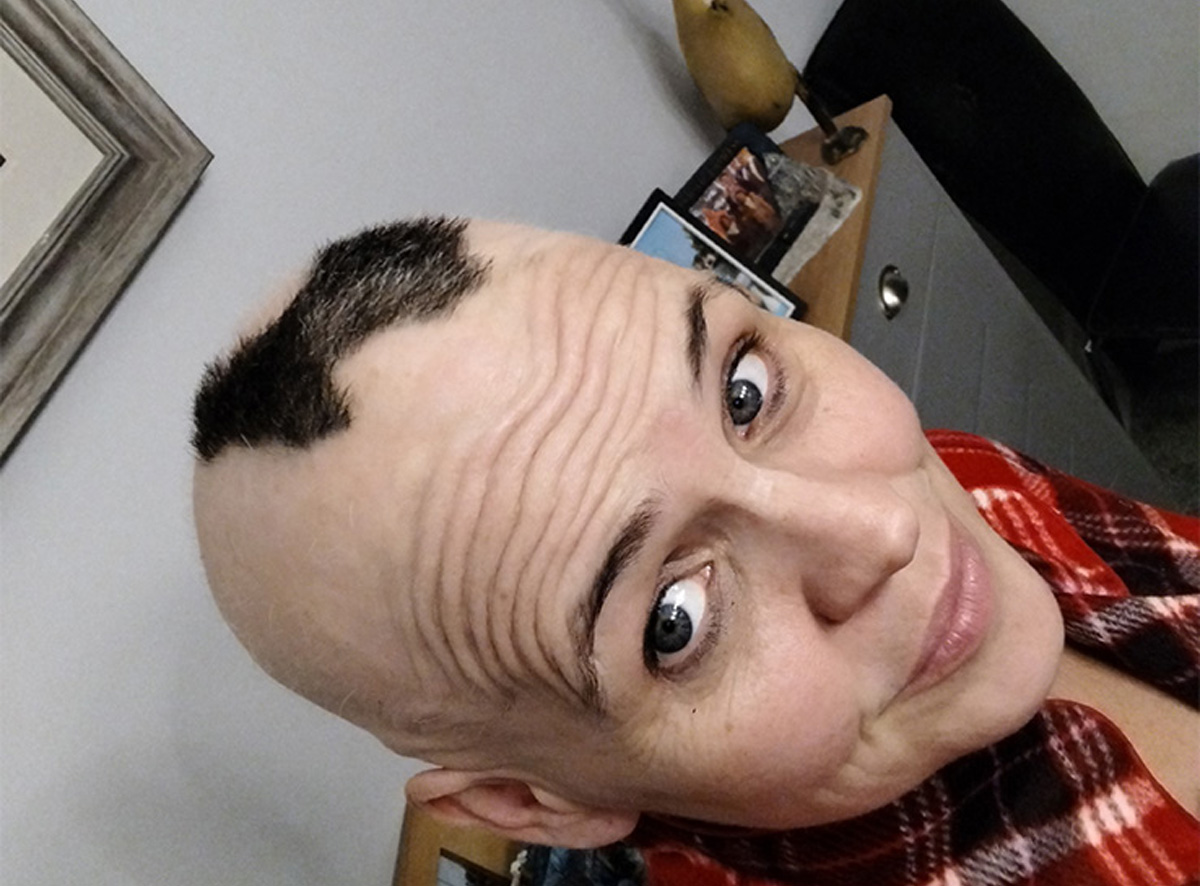
Perhaps your hairdresser spotted it first, or maybe you noticed a small gap while tying your hair up or looking in the mirror. However you discover it, finding a bald patch can be worrying, particularly when you do not know why it has appeared or what might happen next. If this is where you are right now, try not to jump too far ahead. There can be different reasons for patchy hair loss, and the best first step is to speak to your GP.
In this guide, we explain what alopecia areata can look like, what you might want to discuss with your GP, whether hair can grow back and some of the practical options available if you would like a little help covering an area of hair loss.
What is alopecia areata?
Alopecia areata is an autoimmune condition. This means that the immune system mistakenly targets the hair follicles, which can cause hair to fall out. It often appears as one or more round or oval patches of hair loss, although everybody’s experience can be slightly different. Alopecia areata can affect adults and children, and it is not contagious.
This article focuses mainly on patchy alopecia areata. If you are trying to understand the different forms of alopecia and how they compare. If you would like further informtion then please read our guide on all types of alopecia.
What might you notice first?
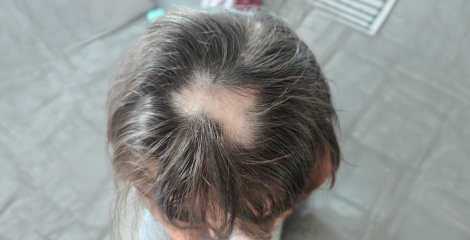
Alopecia areata can show itself in different ways, and the first signs are not always the same for everyone. You may notice a small, smooth patch of hair loss, more than one patch, or changes to hair elsewhere such as the eyebrows or eyelashes. Some people also notice small changes to their nails. These signs can be associated with alopecia areata, but they cannot confirm the cause of your hair loss on their own.
If you are unsure what is causing the hair loss, your GP can help you understand what may be happening.
| Possible change | What it can look like |
|---|---|
| A distinct bald patch | A round or oval area, often with smooth skin. |
| More than one patch | Separate patches that may enlarge or join together. |
| Changes beyond scalp hair | Some people also notice beard, eyebrow or eyelash loss. |
| Nail changes | Small dents or changes in the nail surface. |
Should I see my GP about a bald patch?
Yes, it is a good idea to speak to your GP if you notice unexplained hair loss, even if the patch is quite small. We know it can be tempting to search online, compare photographs or try to work out what is happening yourself, but there are several possible causes of hair loss. The NHS recommends having the cause checked before approaching a commercial hair clinic. When you speak to your GP, mention anything else you have noticed too, such as itching, soreness, redness or scaling. Even something that feels unimportant may help them build a clearer picture.
Getting ready for your appointment
It can be surprisingly easy to forget the questions you wanted to ask once you are sitting in front of your GP, particularly if you are already feeling anxious about your hair. Writing down a few things beforehand can help. You might want to make a note of when you first noticed the patch, whether it seems to have changed, whether you have noticed hair loss anywhere else and any medicines or treatments you are currently using.
The questions below may also help. And remember to mention how the hair loss is making you feel. If it is affecting your confidence, your sleep or simply taking up far more of your thoughts than you would like, that matters too. You do not have to wait until the hair loss becomes more extensive before asking for help or support.
| Question to ask | What it helps you understand |
|---|---|
| Does this look like alopecia areata? | Whether the cause appears clear or if further assessment may be needed. |
| Would a dermatologist referral help? | Whether specialist advice would be useful and who should guide your care next. |
| Is treatment appropriate for me? | What the possible choices are, including their benefits and possible side effects. |
| When should I come back? | How follow-up will work and which changes you should report. |
Does one patch mean I will lose all my hair?
No. Patchy alopecia areata does not inevitably lead to complete hair loss. Its course varies: some people experience regrowth, some have recurring patches and others develop more extensive loss. A new patch cannot tell you which course yours will take. Alopecia totalis describes complete or near-complete scalp hair loss; alopecia universalis involves more extensive loss across the scalp and body. Our separate guides explore those experiences in more detail.
Can hair grow back in an alopecia patch?
Yes, it can.
Alopecia areata is described as a non-scarring form of hair loss, which means the hair follicles are not permanently destroyed and can still produce hair. For some people, regrowth happens without treatment. For others, treatment may be discussed. Unfortunately, there is no reliable way to predict exactly when hair will return, how much will grow back or whether another patch may appear later. You may also notice that the first new hairs look slightly different. They can sometimes be very fine or lighter in colour at first. If you do begin to see little hairs appearing, try to give them time. Regrowth can be gradual.
What treatments might be offered for patchy alopecia areata?
Treatment will depend on your individual circumstances, including how much hair has been affected and how long the hair loss has been present. Sometimes your clinician may suggest simply monitoring the area to see whether regrowth occurs naturally. Other options can include prescription steroid treatments applied to the scalp or steroid injections for smaller patches. If the alopecia is more extensive or persistent, your GP may discuss referring you to a dermatologist so that specialist treatment options can be considered.
There is currently no cure for alopecia areata, and unfortunately no treatment can guarantee permanent regrowth. That can be frustrating to hear, particularly when all you really want is a definite answer. Your doctor or dermatologist can talk you through the options that are appropriate for your own situation.
Further reading: British Association of Dermatologists patient guide
Do I need a wig if I only have a few patches?
Not necessarily.
Having alopecia does not automatically mean that you need to wear a wig, and there is certainly no stage at which you are supposed to start wearing one. If you can comfortably cover the patch with your own hair and you are happy doing that, there may be no reason to change anything. But sometimes the patch itself is only part of the story. You might find yourself repeatedly checking whether it is visible, avoiding certain hairstyles or feeling uncomfortable when the wind blows. You might simply want an option that allows you to stop thinking about your hair for a while. If that is the case, there are different things you can explore:
| Option to explore | What to consider |
|---|---|
| Styling your existing hair | Whether a comfortable change of parting covers the area without pulling on the surrounding hair. |
| A topper or smaller hairpiece | Whether the base covers the patch and whether the attachment is suitable for the hair you have around it. A clip-in topper will not be right for every patch. |
| A full wig | How it sits over your existing hair and how comfortable it feels across areas with and without hair. |
| A scarf or head covering | Whether you would simply like an easy alternative for particular days, occasions or activities. |
You can explore a wig or hairpiece while still having plenty of your own hair. Some people choose one for work or special occasions, while others simply like knowing that they have another option if they want it. And some people decide they do not want anything at all.
There is no right answer.
If you are considering a topper, the position of the patch can be just as important as its size. The base needs to cover the area properly, and there also needs to be suitable hair around it if clips are being used. If you are unsure, please ask us. We would much rather help you work out whether something is suitable before you buy it.
If your scalp is particularly sensitive or you are using a prescribed scalp treatment, let us know too. We can help with the practical side of choosing a wig or hairpiece, while any medical questions about your scalp or treatment should always be checked with your GP.









Comments
No comments yet. Be the first!
Leave a Comment