

Living With Frontal Fibrosing Alopecia (FFA)



What's In This Article
We’ll look at what living with frontal fibrosing alopecia (FFA) can mean day to day, from changes to the hairline and eyebrows to deciding whether a topper, hairpiece or full wig might help. We’ll also cover scalp comfort, treatment and why seeing a dermatologist matters, as well as the emotional side of living with FFA. You’ll also find answers to common questions and links to real Simply Wigs customer experiences, so you can hear from people who have been through something similar.
Living With Frontal Fibrosing Alopecia
A receding hairline can be difficult enough to come to terms with. When the cause is frontal fibrosing alopecia (FFA), there can be another layer of uncertainty: the hair that has already been lost through scarring does not usually grow back, while the speed and extent of future hair loss can vary. If you are living with FFA, you may find that your questions gradually change. They are no longer only ‘What is happening to my hair?’ They become ‘How do I style the hair I have left?’, ‘When might I consider a topper or wig?’, ‘What can I do about my eyebrows?’ and, perhaps most importantly, ‘How do I feel like myself again?’
This guide is about those everyday questions. For a broader explanation of the different forms of alopecia, use our Complete Guide to the Types of Alopecia.
FFA at a Glance
| Question | Practical answer |
|---|---|
| What type of hair loss is FFA? | A form of scarring alopecia |
| Where is hair loss commonly noticed? | The frontal hairline and temples/sideburn areas; eyebrows can also be affected |
| Does hair already lost through scarring regrow? | Usually not once follicles have been destroyed |
| Can progression sometimes be slowed? | Treatment aims to reduce inflammation and slow or stabilise further loss |
| Who should assess suspected FFA? | A GP or dermatologist. Early specialist assessment is important |
| Can wigs or hairpieces help? | Yes. The right option depends on the pattern and extent of hair loss and personal preference |
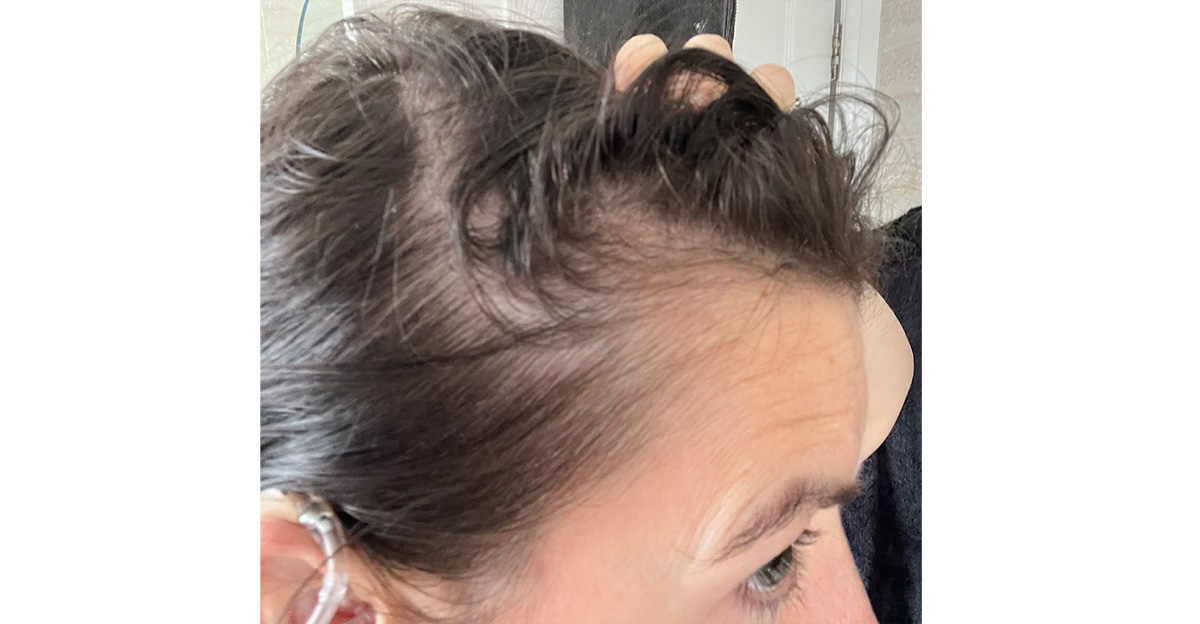
How do I recognise FFA?
FFA typically causes the frontal hairline to move backwards, often around the forehead, temples and sideburns. Eyebrow loss is also common, and some people experience redness, scaling, itching or discomfort around active hair follicles. Because FFA is a scarring form of alopecia, inflammation can permanently damage hair follicles. This is why recognising possible symptoms and seeking medical advice matters.
For more detailed medical information about FFA, you may find the guidance from Alopecia UK and the British Association of Dermatologists helpful.
Living With a Receding Hairline
One of the frustrating things about FFA is that you may still have plenty of hair elsewhere while the front and sides become increasingly difficult to disguise. Some people manage this for years by changing their parting, adding a fringe or adjusting their hairstyle. Others reach a point where continually arranging their remaining hair becomes more stressful than exploring alternative hair. There is no point at which you ‘should’ start wearing a wig or hairpiece. The right time is when it feels useful to you.
Which Hair Solution Might Suit Different Stages?
| Situation | Options to explore | Things to consider |
|---|---|---|
| Early recession at the front/temples | Styling changes, fringe styles or selected hairpieces | Avoid creating unnecessary tension on fragile remaining hair |
| Noticeable frontal loss but good coverage elsewhere | A suitable topper or partial hair solution may be worth discussing | Attachment method, scalp comfort and whether there is enough suitable hair for secure attachment |
| More extensive frontal/side loss | A full wig may provide easier, consistent coverage | Cap size, comfort, hairline appearance and security |
| Sensitive or inflamed scalp | Prioritise medical advice and gentle, comfortable options | Avoid anything that irritates active or tender areas |
When Might a Full Wig Be Easier?
Some people with FFA reach a stage where a full wig actually feels simpler than trying to disguise a receding hairline every morning. A wig can give you a complete hairstyle and a new hairline without depending on the position or density of your remaining frontal hair.
Useful features to consider can include:
- A lace front for a natural-looking front hairline
- A monofilament or hand-tied area for a natural scalp appearance
- A lightweight cap if you wear your wig for long periods
- The correct cap size so the wig feels secure without being unnecessarily tight
- A style and colour that feels like you. Whether that means recreating your previous hair or trying something completely different
What About Eyebrow Loss?
Eyebrow loss can be one of the first or most noticeable changes with FFA. For some people it changes the appearance of their face as much as the receding hairline. If you want to recreate your brows, options range from everyday eyebrow make-up and temporary products to longer-lasting cosmetic approaches. The right choice is personal, as we find out in this customer story.
Treatment: Why Seeing a Dermatologist Matters
Treatment for FFA is aimed at reducing inflammation and trying to slow or stabilise further hair loss; it cannot restore follicles that have already been destroyed by scarring. A dermatologist may discuss topical or injected corticosteroids and other medicines depending on the individual. Treatment choices and evidence continue to evolve.
For more detailed medical information about FFA and current treatment options, visit:
- British Association of Dermatologists – Frontal Fibrosing Alopecia patient information.
- Alopecia UK – Frontal Fibrosing Alopecia
The Emotional Side of Living With FFA
FFA can progress slowly, which can create a strange kind of waiting. You may find yourself checking your hairline, comparing photographs or wondering how much hair you will have in six months or a year. For other people, the hardest part is that friends and family do not necessarily notice the loss in the early stages, even though it feels enormous to the person experiencing it. There is no correct way to deal with that. Some people want to talk openly about their FFA. Others keep it private.
Some wear wigs confidently; others need time before they are comfortable with the idea.

Real Simply Wigs Experiences of FFA
- Amanda’s Story: Coming to Terms with Frontal Fibrosing Alopecia
- Anne’s Story: My Hair Has Gradually Receded: Living with Fibrosing Alopecia
- Lynda’s Story: My Eyebrows Had Disappeared – a customer’s FFA journey
- Sandra’s Story: Here’s Why My Wig Needs to Be Perfect – living and performing with FFA
- Gillian’s Story: Discovering I Have a Rare Form of Alopecia – a customer’s diagnosis and journey
Living With FFA: Frequently Asked Questions
Living with frontal fibrosing alopecia can bring up lots of questions, especially as the condition can affect people in different ways. Below, we’ve answered some of the most common questions about hair regrowth, progression, eyebrow loss and choosing between wigs and hairpieces.
- Will My Hair Grow Back With FFA?
-
Hair follicles that have been destroyed by scarring do not usually regrow. Treatment therefore focuses on slowing or stabilising further progression rather than restoring hair already permanently lost.
- Does FFA Always Get Worse?
-
The course varies. FFA may progress at different rates and can become inactive or stabilise. A dermatologist is best placed to assess signs of active disease and discuss monitoring or treatment.
- Can FFA Affect My Eyebrows?
-
Yes. Eyebrow loss is a recognised feature of FFA and can sometimes appear before noticeable recession of the scalp hairline.
- Can I Wear a Wig If I Still Have Hair?
-
Yes. You do not need to wait until hair loss becomes extensive. Some people choose a wig because it is easier than continually styling remaining hair to disguise frontal loss.
- Is a Topper Better Than a Wig for FFA?
-
Neither is automatically better. It depends on where your hair loss is, the condition of the remaining hair and scalp, how you want to attach the piece and what feels comfortable.
- Should I See a Dermatologist Early?
-
Yes. Because FFA is a scarring alopecia and lost follicles cannot normally be restored, specialist assessment is important when FFA is suspected.
Where to Go Next
- Understand the wider alopecia family: Complete Guide to the Types of Alopecia
- Considering alternative hair: Choosing Your First Wig After Hair Loss
- Want to hear from someone who understands: Other Simply Wigs customer stories
- Explore everything: Simply Wigs Alopecia Resource Centre
Living with frontal fibrosing alopecia can take some adjustment, and what feels right for one person may not feel right for another. You may decide to keep styling your own hair, try a topper or hairpiece, move to a full wig, or simply take things one step at a time. There is no single right way to manage FFA. What matters is finding an approach that feels comfortable, practical and right for you.
At Simply Wigs, we’re here to offer clear advice, thoughtful support and real experiences from people who understand hair loss.











Comments
No comments yet. Be the first!
Leave a Comment