

Scarring Alopecia: What It Means and Where to Find Support



What's In This Article
A reassuring guide to scarring alopecia, the questions to ask your dermatologist and how to explore wigs and toppers at your own pace.
If you have recently been told you have scarring alopecia, you may still be trying to take it all in. The word “scarring” can sound frightening, particularly when you are already worried about your hair. Perhaps you left your appointment feeling reasonably clear, only to think of a dozen more questions on the way home.
At Simply Wigs, we want you to have information you can understand and somewhere to turn when you need a little help. Here, we explain what scarring alopecia means, why getting your scalp checked matters and some of the questions you might want to ask next. Scarring alopecia at a glance: Scarring alopecia, also called cicatricial alopecia, is hair loss in which affected follicles are destroyed and replaced by scar tissue. Hair cannot regrow from those follicles. For inflammatory forms, treatment aims to control inflammation and protect remaining hair, so early assessment matters.
What does scarring alopecia mean?
A hair follicle is the small structure in your skin from which a hair grows. With scarring alopecia, affected follicles are permanently damaged and replaced by scar tissue. “Cicatricial alopecia” is another name for scarring hair loss.
There are several conditions within this group. Your dermatologist can explain which one is affecting you and what that means for treatment. A diagnosis does not automatically mean that you will lose all your hair; the extent and course vary.
| Term you may hear | What it means |
|---|---|
| Scarring alopecia | Hair loss involving permanent destruction of hair follicles. |
| Primary scarring alopecia | Conditions in which inflammation targets and damages the hair follicles. |
| Secondary scarring alopecia | Follicles are destroyed as part of other damage to the skin, such as a burn or injury. |
| Active disease | There is ongoing inflammation or progression. |
| Stable or inactive disease | There is no evidence of current progression at assessment; follow-up may still be needed. |
You are not expected to remember every medical term. This little guide is here to help you follow the conversation, while your dermatologist works out what is happening with your scalp
How it differs from other forms of alopecia?
You may have read about someone whose hair grew back after alopecia and wondered whether yours will do the same. The answer depends on the type of hair loss. With alopecia areata, including totalis and universalis, follicles are not destroyed by scarring, so regrowth remains possible, although it is not guaranteed. Where scarring has destroyed a follicle, that hair cannot regrow.
Names for Scarring Alopecia, you might hear at your appointment
| Condition | Typical pattern or features |
|---|---|
| Lichen planopilaris (LPP) | Often causes patches of hair loss, sometimes with itching, burning or scaling around hairs. |
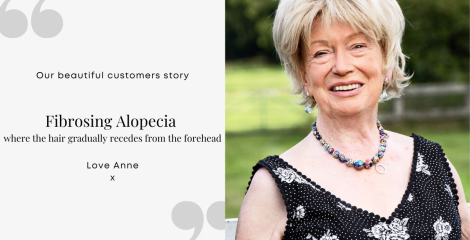
| Frontal fibrosing alopecia (FFA) | Usually involves recession at the front and sides of the hairline. Eyebrows may also be affected. |
| Central centrifugal cicatricial alopecia (CCCA) | Usually starts around the crown and spreads outwards. It most often affects Black women. |
You might recognise one of these names from a letter or appointment. They are examples, rather than a complete list, and similar looking patches can have different causes. Comparing your scalp with an online photograph cannot confirm a diagnosis.
If you are specifically living with FFA, you may also find our Living With Frontal Fibrosing Alopecia guide helpful.
Changes worth getting checked
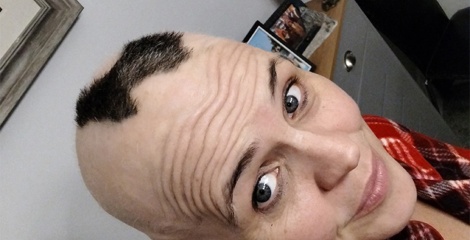
For some people, the first clue is a scalp that feels itchy, sore or unusually tender. Others notice their hair changing without much discomfort at all. An affected area may look smooth or shiny, but you will not necessarily see an obvious scar. If you have noticed unexplained patches, a changing hairline or thinning alongside scalp discomfort, please make an appointment with your GP and ask whether you need to see a dermatologist. Even if the change seems small, it is worth getting checked. Early assessment may help protect hair that has not yet been lost. Before you go, jot down what you have noticed and roughly when it started. It could be as simple as “my scalp has been burning” or “this patch seems wider than it was last month”. Photographs can be useful too, particularly if you find it difficult to explain what has changed.
A few questions to take with you
A dermatologist may examine your scalp closely, discuss your symptoms and medical history, and recommend a small scalp biopsy to help identify the cause. A biopsy involves taking a skin sample under local anaesthetic. Not everyone will need the same investigations. Have you ever come out of an appointment and realised you forgot the very thing you wanted to ask? When there is a lot to take in, having a few questions written down can help. You can save these on your phone and choose the ones that matter most to you.
| Question to ask | What it helps you understand |
|---|---|
| Which type of hair loss do I have? | Your diagnosis and whether scarring is involved. |
| Is there evidence that it is active? | What is happening now and why treatment may be offered. |
| What is the aim of my treatment? | Whether the priority is controlling symptoms, protecting remaining hair or both. |
| How will we know whether it is helping? | How progress will be checked and when to review it. |
| What changes should I report sooner? | When to contact the clinic between appointments. |
| What can I safely use on my scalp? | Advice on hair care, colouring and any wig or hairpiece attachments. |
How treatment may help
Treatment depends on the cause. For inflammatory scarring alopecia, the aim is generally to control inflammation and reduce further damage. Prescribed scalp treatments, injections or tablets may be considered, with the choice tailored to the diagnosis and the individual. Treatment cannot bring back a follicle that has already been destroyed. Some improvement may be possible where follicles remain, which is why early assessment can make a difference. The right treatment and response vary from person to person. Being told that some hair will not grow back can be hard to hear. It is perfectly reasonable to ask your dermatologist to go over it again, including which areas they hope treatment will protect. You deserve to come away understanding what the plan means for you.
Thinking about a wig or topper?
Perhaps you have already had a little look at wigs, then closed the page because you did not know where to start. Or perhaps a topper feels like something you would like to explore. You can ask us questions while you are still deciding; you do not need to arrive with a style picked out or know whether you want to wear alternative hair at all.
If your scalp is tender, tell us. How a wig or topper feels matters just as much as how it looks. Speak to your dermatologist about clips, tapes or adhesives, especially if your scalp is sore or inflamed, and let our team know any advice you have been given. That helps us talk through suitable fit and attachment options with you.
| What you would like help with | What we can talk through |
|---|---|
| A smaller area you would like to cover | Whether a topper can provide coverage and attach without pulling on fragile hair. |
| Several areas or more extensive loss | Whether a full wig would make getting ready a little easier. |
| A tender or sensitive scalp | How the cap, seams and edges feel, and whether any attachment causes irritation. |
| Looking like you | Finding a colour, fullness and style that feel like your own hair. |
A little support along the way
Hair loss has a way of creeping into ordinary moments. You might catch yourself checking your parting in a shop window, moving your hair before a photograph or wondering whether someone has noticed. Even if those around you say they cannot see a difference, that does not make your own feelings any less important.
Here at Simply Wigs, you do not have to apologise for asking questions or for feeling upset about your hair. We can talk through wigs and hairpieces with you, explain the unfamiliar bits and help you think about what would work for your everyday life. Your medical team will guide your scalp care, and we are here when you would like a hand with your hair options. Speak to the Simply Wigs team
This article provides general information and does not replace advice from your GP or dermatologist.
Frequently asked questions about scarring alopecia
It is natural to have more questions after a diagnosis. Here are a few straightforward answers to help you understand the next steps.
- Can hair grow back with scarring alopecia?
-
Hair cannot grow back from follicles that have been destroyed and replaced by scar tissue. Depending on the condition, treatment may help preserve remaining hair, and some regrowth may be possible where follicles are still present.
- Does scarring alopecia mean I will lose all my hair?
-
No. The amount and pattern of hair loss depend on the condition and the individual. Your dermatologist can explain what they have found and what they hope treatment will achieve.
- Can scarring alopecia develop without itching or pain?
-
Yes. Some people notice hair loss without scalp discomfort. New or changing hair loss is still worth discussing with your GP, even if your scalp feels comfortable.
- Is frontal fibrosing alopecia a type of scarring alopecia?
-
Yes. Frontal fibrosing alopecia is a scarring form of hair loss that commonly affects the front and sides of the hairline and can also affect the eyebrows.
- Can I wear a wig or topper if I have scarring alopecia?
-
A wig or topper may be an option, depending on your coverage needs, remaining hair and scalp comfort. Discuss attachments with your dermatologist if your scalp is inflamed or tender. Our team can help you explore fit, style and practical options.
- Do I need a scalp biopsy?
-
Not everyone does, but a dermatologist may recommend one to help identify the cause of your hair loss. The sample is taken under local anaesthetic. Ask what the test involves and how the results will guide your care.






Comments
No comments yet. Be the first!
Leave a Comment