

Should I Shave My Head? The Ultimate Alopecia Guide for Women Facing Hair Loss



What's In This Article
This guide shares what we’ve learned from nearly 20 years of supporting people experiencing hair loss. It isn’t medical advice. If you’re worried about hair loss, please see your GP or a dermatologist and If you would like further informtion, then please read our guide on all types of alopecia.
If you’re reading this, you’ve probably stood in front of a mirror and thought about it. Maybe your alopecia has moved from one patch to several. Maybe the hair on your pillow every morning has become harder to face than the idea of having none at all. Maybe you’re about to start chemotherapy and you’d rather choose the day than have it chosen for you.
Whatever brought you here, we want to say this first: there is no right answer, and you don’t have to decide today.
We’ve been helping women through this exact decision since 2007, when our own family was thrown into the world of hair loss and we started Simply Wigs from our kitchen table. Since then we’ve spoken with thousands of women at every stage, from the first patch to years into wearing wigs. Some shaved and never looked back. Some shaved and wished they’d waited. Many never shaved at all and found other ways to feel like themselves.
This guide brings all of that together. It covers understanding your type of alopecia, whether shaving actually helps hair loss (the honest answer), how to know if you’re ready, how to shave safely as a woman, what to expect afterwards, haircut alternatives if you’re not ready for a full shave, and what comes next with wigs, headwear or going bare. It’s long, because the decision deserves it. Use the contents to jump to what you need.
The Short Answer
Should you shave your head if you have alopecia? Only if it would make your life easier or your days happier. Shaving does not treat alopecia, does not speed up regrowth and does not make hair grow back thicker. What it can do is give you back a sense of control, remove the daily reminder of shedding, make patchy loss uniform, and make wigs and headwear sit better.
If you’re unsure, you’re not ready, and that’s fine. Many women who eventually shave think about it for months first. A short haircut, a topper or headwear can bridge the gap while you decide.
How each alopecia type affects the decision to shave
| Type of Hair Loss | What It Means When Considering Shaving |
|---|---|
| Alopecia areata | Alopecia areata is an autoimmune condition where the immune system attacks hair follicles, causing smooth, round patches of hair loss. It affects roughly two in every hundred people at some point in their lives, according to Alopecia UK. It can stay as one or two patches, spread, or progress to alopecia totalis (total loss of scalp hair) or alopecia universalis (loss of all body hair). Regrowth is common, especially with limited patches, but the condition can come and go. Because the follicles are still alive, shaving is safe and many women choose it when patches become difficult to cover. |
| Female pattern hair loss | Female pattern hair loss (androgenetic alopecia) is gradual thinning, usually across the crown and parting, and is often hereditary. It rarely leads to complete baldness. Shaving is less common here because a bare scalp can make the thinning appear more noticeable; a shorter cut or a topper may be a better option. |
| Telogen effluvium | Telogen effluvium is diffuse shedding triggered by stress, illness, childbirth, medication or rapid weight change. It is usually temporary and often resolves within six to twelve months once the trigger has passed. Because the condition may reverse on its own, you may prefer to wait or try a shorter hairstyle before deciding to shave. |
| Traction alopecia | Traction alopecia is caused by prolonged tension from tight hairstyles, extensions or braids. If it is recognised early and the tension is removed, the hair may recover. Shaving itself will not treat the condition; removing the repeated tension is the important step. |
| Chemotherapy-induced hair loss | Chemotherapy-induced hair loss typically begins two to three weeks after the first treatment and is usually temporary, with regrowth beginning after treatment ends. Many women choose to shave before or as shedding begins. Our guide to preparing for hair loss during chemotherapy covers this in more detail, and Macmillan Cancer Support also provides further guidance. |
| Scarring alopecias | Scarring alopecias, including CCCA (central centrifugal cicatricial alopecia), lichen planopilaris and frontal fibrosing alopecia, permanently damage the hair follicles. These conditions need assessment by a dermatologist as early as possible, and shaving may require extra consideration if the scalp is inflamed, tender or sensitive. |
| Trichotillomania | Trichotillomania is a hair-pulling condition rather than a disease of the hair follicle. Some people find that shorter or shaved hair reduces access to the hair they would normally pull, while for others it does not. Our article on trichotillomania coping skills is a gentle starting point. |
If you are unsure which type of hair loss you have, our Complete Guide to Alopecia Types explains the main conditions and how they differ.
If you haven’t yet had a diagnosis, please see your GP before making any decision about shaving. Knowing which type you have tells you whether your hair is likely to return, and that changes everything about the choice. The NHS hair loss page is a reliable first read.
Does Shaving Your Head Help With Hair Loss?
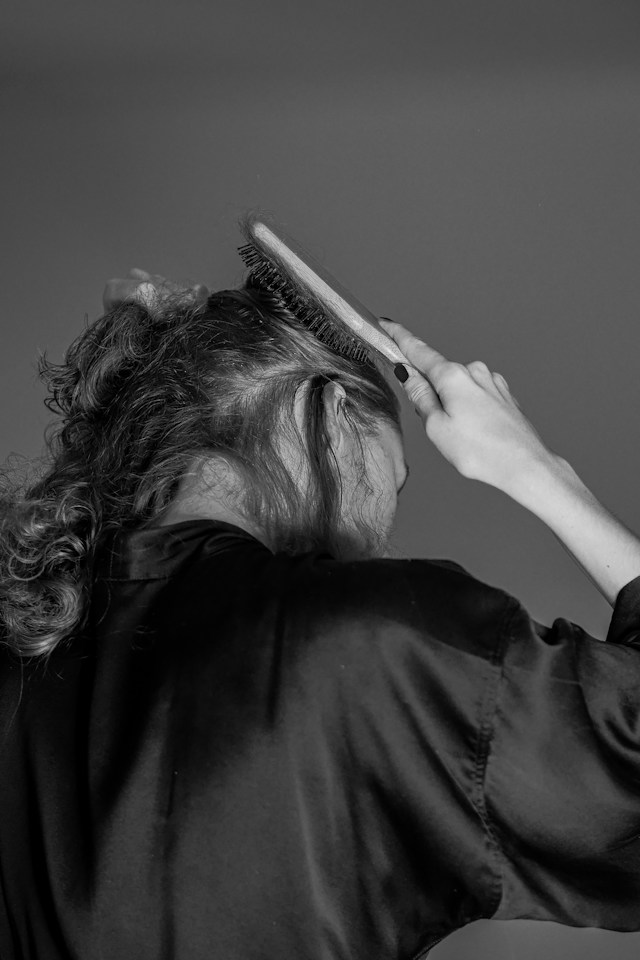
This is one of the most searched questions about hair loss and the answer is a clear no. Shaving does not help hair loss, does not stimulate growth, and does not make hair grow back thicker or faster.
Hair grows from the follicle beneath the skin. A razor or clipper only touches the shaft above the surface; it has no effect on the follicle, the growth cycle or the hormones and immune responses that cause alopecia. The British Association of Dermatologists and the NHS are consistent on this.
The myth persists for two understandable reasons. First, regrowth after shaving has a blunt tip rather than a naturally tapered one, so stubble feels coarser and looks darker against the skin. Second, when hair regrows for another reason (an alopecia areata patch recovering, or hair returning after chemotherapy), people who happened to shave attribute the regrowth to the razor.
So if you’re asking “can shaving my head help with hair loss?” hoping it might be a treatment, it isn’t. If you’re asking because you want to know whether it will do any harm, it won’t. Shaving is neutral for your follicles. The decision is about how you want to live with your hair loss, not about changing it.
Why Women With Alopecia Choose to Shave
Over the years we’ve heard the same handful of reasons again and again, and every one of them is valid.
To take back control. Hair loss can feel like something happening to you. Choosing the day, the place and the person holding the clippers turns it into something you do. One customer told us: “I felt like I was saying ‘ok alopecia, you win’, but within a week the bald me wasn’t a shock in the mirror any more.”
To stop the daily reminder. Hair on the pillow, in the shower, on your coat. For many women the slow loss is far harder than the finished result. Shaving ends it in an afternoon.
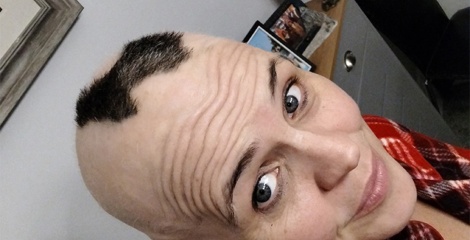
To make patchy loss uniform. Alopecia areata rarely takes everything at once. Several patches at different stages are difficult to style around and easy to see. A close crop or full shave makes the scalp one even surface.
Because the remaining hair is a nuisance. Long, sparse hair tangles, sheds constantly and gets caught under wig caps. A customer with rapidly progressing alopecia universalis described her remaining shoulder-length hair as “more of a hindrance than it would be to have none”.
To make wigs and headwear sit better. A wig over a smooth scalp fits more securely, looks flatter at the hairline and feels cooler. If you’re already wearing a wig every day, you may find shaving is a practical upgrade rather than an emotional leap.
To save time. Not styling, not hiding, not checking the parting in every window. Some women find the freedom unexpectedly joyful.
To do it before chemotherapy does. Choosing the day rather than waiting for the shedding is one of the most common reasons we hear.
Reasons to Wait, or Not to Shave at All
Shaving is permanent in the short term, and it isn’t the right choice for everyone. Be honest with yourself about these.
- Your hair loss is likely to reverse. Telogen effluvium, early traction alopecia and many cases of patchy alopecia areata recover. If a dermatologist expects regrowth within months, shaving means living without hair for longer than you otherwise would.
- You’re thinning rather than losing. With female pattern hair loss, a shaved scalp often looks sparser than a well-cut short style or a topper.
- You’re not sure. Not being sure is your answer for now. If you’re unsure, giving yourself a little more time before deciding may help.
- You’re doing it because someone else thinks you should. Partners, friends and hairdressers all mean well. This is your head.
- You have active inflammation, sores or broken skin. Shaving over an inflamed scalp can make things worse. Ask your dermatologist first.
- You’d be shaving to hide it from yourself. A shaved head is very visible. If you’re not yet at peace with the hair loss, headwear may give you time in a way that a shave can’t.
When to Shave Your Head: A Decision Checklist
There’s no formula, but these questions come up in every conversation we have with a woman weighing it up. Work through them honestly.
- Do I know what type of alopecia I have, and what my dermatologist expects to happen?
- Is the remaining hair making my life harder? Tangling, shedding, styling time, wig fit.
- Am I spending more energy hiding it than I would spend living with a shaved head?
- Have I tried a shorter cut, a topper or headwear first? Not as a test of bravery, as a genuine alternative.
- When I picture myself shaved, how do I feel? Relief and curiosity are good signs. Dread is a sign to wait.
- Do I have a wig or headwear ready if I want one? Many women feel calmer knowing the option is in the wardrobe.
- Is there someone I trust to be with me?
- Am I choosing this, or am I being rushed?
If most of your answers point the same way, you probably already know. If they don’t, give it another few weeks and come back.
Alopecia Haircuts: When a Cut Beats a Shave
A full shave isn’t the only option, and for many women it isn’t the best one. A well-chosen short haircut can make patchy or thinning hair far less noticeable while keeping something to run your fingers through.
The close crop (grade 2 to 4, roughly 6 to 12mm). Long enough to soften the scalp, short enough that patches blend in. This is the most popular halfway house we see, and it’s what many women mean when they say “shaved”. It grows out gracefully if regrowth comes.
The pixie. Face-framing and feminine, and it works surprisingly well with patches at the back or sides because the length on top draws the eye. Ask for texture rather than a blunt shape.
The soft undercut. Shaving the nape and sides where patches are, keeping length on top. Good for alopecia areata that’s concentrated low on the head.
Choosing a hairdresser. Look for someone who has worked with hair loss before and ask them to talk you through options before they pick up the scissors. Several of our customers found their hairdresser talked them out of a full shave and into a cut they loved. Others found the opposite. Either way, a good stylist is an ally.
If you have a bald spot on top. One reader asked us whether a close crop would “look like a monk”. Our honest answer: a very close crop with a visible crown patch can draw the eye to it, while a slightly longer crop with texture on top, or a small topper, usually disguises it better. If the patch is the reason you’re considering shaving, a full shave will look more intentional than a crop with one bare area.
If your regrowth is darker than your dyed hair. Another reader kept her hair bleached blonde to hide thinning and worried that dark regrowth after a shave would show the pattern more. She’s right that it can. Clippers on the lowest guard rather than a razor keep a uniform shadow that reads as a deliberate style rather than a bald patch.
Our guides on wigs and hairpieces for thinning hair and the ultimate guide to headwear for hair loss cover the alternatives in more depth.
How to Shave Your Head as a Woman, Step by Step
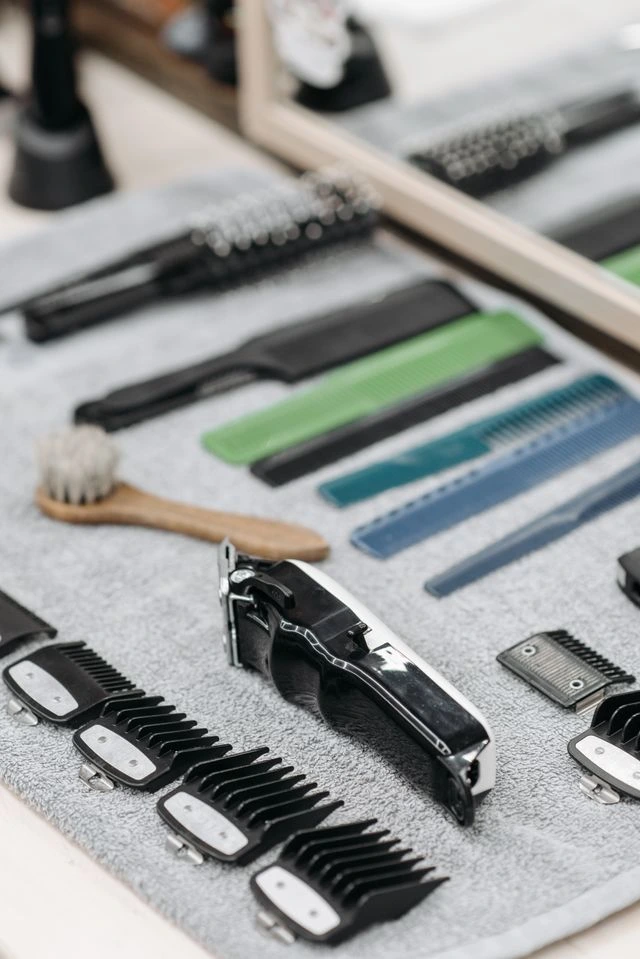
Yes, you can shave your own head. Plenty of our customers do, and after the first time it takes ten minutes. If you’d rather not, any barber or hairdresser will do it, and many will do it quietly after hours if you ask. Here’s how to do it yourself.
What you’ll need
- Hair clippers with guards (a basic set is fine)
- A hand mirror and a wall mirror, or a friend
- A towel or old sheet for the floor
- If going fully smooth: a fresh razor, shaving gel for sensitive skin, warm water
- Afterwards: a gentle fragrance-free moisturiser and scalp SPF
Step 1: Cut long hair down first. If your hair is longer than a few inches, cut it to a couple of inches with scissors before you use clippers. Clippers jam on long hair and pull, which hurts.
Step 2: Start with a longer guard. Put a grade 3 or 4 guard on and go over the whole head, moving against the direction of growth. You may find you like this length and stop here. Don’t jump straight to a zero.
Step 3: Work down the guards. Drop to a grade 2, then 1, then no guard if you want a very close crop. Go slowly around the ears and the nape, and use the hand mirror for the back.
Step 4: If you want it smooth, wet-shave. Wait a day if you can; freshly clipped skin is sensitive. Wash your scalp with warm water, apply gel, and shave with the direction of growth in short strokes, rinsing the blade often. Don’t press. Use a fresh blade; a dull one causes razor bumps.
Step 5: Rinse and moisturise. Cool water, pat dry, then a light moisturiser. Your scalp has been under hair for a long time and will be surprised.
Two cautions. Don’t shave over patches that are red, sore or broken; clip around them and speak to your dermatologist. And if your scalp is very pale after years under hair, keep the first few days out of direct sun.
Our customer Karen asked in the comments whether she could shave her hair herself. The answer is yes, and if you’d like company while you do it, our team in Slaithwaite is always happy to talk it through by phone on 01484 844557.
Looking After a Shaved Scalp
A bare scalp is skin that has spent years in the shade. It needs a little more care than you might expect, and getting it right stops the itching and flaking that put some women off in the first week.
- Cleanse gently. A mild shampoo or a fragrance-free body wash, once a day. You don’t need scalp-specific products.
- Moisturise daily. A light, fragrance-free lotion, morning and night for the first fortnight. Coconut oil is popular but can clog pores on some skin.
- Use SPF every day you’re outside. The scalp burns fast. Use SPF 30 or above, or a hat. Some women keep a stick sunscreen in their bag for the top of the head.
- Keep warm. You’ll notice heat loss through your head, especially at night in winter. A soft sleep cap or a light beanie helps.
- Expect an adjustment week. Itching, tightness and sensitivity to your pillowcase are all normal in the first week and settle down.
- Maintain it. A clipper crop needs going over every one to two weeks. A smooth shave needs doing every two to four days to stay smooth. Many women find the clipper crop is the better long-term compromise.

Will My Hair Grow Back?
Shaving does not change whether your hair will regrow. That depends on the type and cause of your hair loss. Some non-scarring conditions can allow regrowth, while hair cannot regrow from follicles permanently destroyed by scarring. For a fuller explanation, read our guide to hair regrowth after alopecia.
A Note on CCCA and Scarring Alopecia
Central centrifugal cicatricial alopecia, or CCCA, is a scarring form of alopecia that most often affects Black women. It usually begins at the crown and spreads outwards, and unlike alopecia areata it destroys the follicle permanently as it goes. Early diagnosis and treatment by a dermatologist, typically with anti-inflammatory medication, is the only way to slow or stop it.
We mention this because shaving advice for CCCA is different, and because many women searching for “CCCA before and after” pictures are trying to work out what realistic results look like.
Shaving does not treat CCCA, and it won’t bring hair back to the scarred central area. What it can do, once the condition is stable, is make the scalp uniform and remove the styling tension that can make things worse. If you have CCCA and are considering a shave, please talk to your dermatologist first, and use clippers rather than a razor; the scalp in CCCA is often tender and inflamed and a close wet shave can irritate it.
On “before and after” pictures online: the genuine ones show inflammation calming and the edges of the affected area stabilising after treatment. They don’t show regrowth in the scarred centre, because that isn’t how scarring alopecia works. Be cautious of any product claiming otherwise.
We’ll be publishing a full guide to CCCA soon. In the meantime, the British Association of Dermatologists publishes patient information leaflets on scarring alopecia that are worth reading.
Life After the Shave: Wigs, Headwear and Going Bare
The decision to shave and the decision to wear a wig are separate, and you can make them in either order. Here’s what changes.
Wigs fit better on a shaved or closely cropped head. There’s no hair to flatten under the cap, the hairline sits closer to your skin, and it’s cooler. If you have complete hair loss, look for caps designed for it: some have silicone strips or poly patches at the temples and nape that grip bare skin. Our guide to wig cap construction explains the options, and wigs for alopecia gathers the styles our alopecia customers choose most.
How do wigs stay on with no hair? This is the question a reader called Teresa asked us, and it’s the one we’re asked most in the shop. The answer is fit first, then help if you want it. A wig in the right cap size stays put on a bare head on its own for normal daily wear. For extra security, wig tape or a silicone wig grip band are quick, comfortable and removable. Our wig size guide shows you how to measure, and if you have a smaller head we stock a full range of petite size wigs.
Headwear is a beautiful option in its own right, not a consolation prize. Turbans, headscarves and soft caps come in every colour and can be worn every day or just on bare-head days. Start with our ultimate guide to headwear for hair loss.
Going bare is a choice more women make than you’d think, especially for exercise, holidays and at home. One customer told us she planned to “embrace the bald” for sport and wear wigs for everything else. You don’t have to pick one.
Two practical notes for UK readers. Wigs bought for medical hair loss are eligible for VAT relief, which takes 20 per cent off the price; you just sign a short declaration at checkout. And if cost is a barrier, our Wig Bank accepts donated wigs and passes them on free of charge.
Making the Day Itself a Good One
If you decide to go ahead, the day you shave can be anything you want it to be. Here are the approaches our customers have taken.
Keep it quiet. One trusted friend, a bottle of something nice, a face mask and the clippers. Space to cry if you need to and to laugh when it’s done.
Do something bold with it first. Dye it a colour you’d never dare keep. Cut a style you’ve always wondered about. Take photos. Then shave.
Make it a fundraiser. A sponsored head shave for Alopecia UK, Macmillan or any cause you care about turns the day into a celebration and answers every awkward question before it’s asked. It also gives you a ready explanation if you’d rather not discuss your hair loss with people you don’t know well.
Keep a lock. For many women hair loss is a real grief, and there’s nothing odd about keeping a small keepsake. Several small businesses make jewellery from hair.
Have your wig ready. Whether you plan to wear it every day or just for the first week, knowing it’s there takes the pressure off. Try it on before you shave so the fit isn’t a worry on the day.
Let your partner help, if you have one. Our founder Emma’s husband Stuart has been part of this business from the start, and we’ve heard from dozens of women whose partners shaved their heads for them. It’s often the moment a partner stops feeling helpless.
Real Women, Real Decisions
These are drawn from comments left on our blog over the years, shared with first names only. They're here because the honest range of experiences matters more than any advice we could give.









Emma shaved off her last strands with alopecia and cried the whole time, feeling she’d let the condition win. Within a week the bald reflection wasn’t a shock, and not finding hairs on her pillow every morning was a relief. Her advice: be ready, because it isn’t an easy choice.
Julie lost her hair to chemotherapy for ovarian cancer. Her husband shaved it two weeks after her first session. She made two decisions: to let the people close to her see her bare, and to have fun with wigs. She finished treatment with a wardrobe of styles, including a blue one, and no intention of giving them up.
Nicola had rapid alopecia universalis and found her remaining shoulder-length hair more hindrance than help. She bought two wigs, planned to go bare for sport, and booked her shave the same week as her first wig consultation.
Rebecca started shaving the day after buying a wig and stopped halfway through, unsure she’d made the right choice. Reading other women’s stories gave her the confidence to finish.
Laura wears two toppers for thin, patchy hair and was weighing up a full shave, but wanted “the right wig first, with some glamour for going out”. That order, wig first then shave, is one we’d recommend to anyone.
If you’d like to share your own experience, we’d love to hear it. Join our community or leave a comment below.
Frequently Asked Questions
- Should I shave my head if I have alopecia?
-
Only if it would make daily life easier or help you feel more in control. Shaving doesn’t treat alopecia or affect regrowth. It’s a personal choice, and waiting until you feel certain is always fine.
- Does shaving your head help with hair loss?
-
No. Shaving only cuts the hair shaft above the skin and has no effect on the follicle, so it cannot slow hair loss, stimulate growth, or make hair grow back thicker. Stubble feels coarser because the ends are blunt, not because the hair has changed.
- Should I shave my head if I have a bald spot?
-
If the spot is small and your dermatologist expects regrowth, a textured short cut or a small topper usually hides it better than a shave. If the spot is the reason you’re considering shaving, a full shave will look more deliberate than a close crop with one bare patch.
- Why do people with alopecia shave their heads?
-
The most common reasons are to take control of the process, to stop the daily shedding, to make patchy loss uniform, because the remaining hair is a nuisance, and to make wigs and headwear fit better. Many women shave before chemotherapy so they choose the day.
- When should you shave your head?
-
When the remaining hair is causing you more trouble than a bare scalp would, you know what type of alopecia you have and what to expect, and the thought of shaving brings relief rather than dread. If you’re unsure, that’s a sign to wait.
- Can I shave my own head as a woman?
-
Yes. Cut long hair down with scissors first, then use clippers starting with a longer guard and working down. Wet-shave with a fresh razor only if you want it smooth, and moisturise afterwards. A hairdresser or barber will do it for you if you’d rather not.
- Will my hair grow back after I shave it with alopecia areata?
-
Shaving doesn’t change the outcome. With alopecia areata, regrowth is common and often happens within a year, though it can return white or fine at first and may fall out again. A dermatologist can advise on your case.
- How do wigs stay on a shaved head?
-
A correctly sized wig stays on a bare scalp on its own for normal wear. For added security, wig tape or a silicone grip band hold it firmly through exercise or wind. Some caps designed for total hair loss have silicone or poly patches built in.
- Is it better to shave or cut short with alopecia?
-
For patchy alopecia areata, either works, and a close crop (grade 2 to 4) is a popular middle ground. For thinning from female pattern hair loss, a short textured cut or a topper usually looks fuller than a shave. For scarring alopecia, speak to your dermatologist first.
- Does hair grow back thicker after shaving?
-
No. Hair thickness is set by the follicle. Regrowth after shaving has a blunt tip, which feels coarser and looks darker, but it is the same hair.
Where to Get Support
You don’t have to work this out alone. These are the organisations and articles we point our customers to most often.
- Alopecia UK: the national charity, with a helpline, local support groups and reliable treatment information.
- NHS: hair loss: when to see a GP and what treatment the NHS offers.
- British Association of Dermatologists: patient information leaflets on every type of alopecia.
- Macmillan Cancer Support: guidance on hair loss during cancer treatment.
- Our own alopecia support groups list, Finding Confidence Through Hair Loss, and Lessons Learned From Experiences With Alopecia.
- For children: Children with Alopecia.
And if you’d like to talk to someone who has had this conversation hundreds of times, ring us on 01484 844557 or book an appointment at our shop in Slaithwaite, Huddersfield. There’s no pressure to buy anything. Sometimes it just helps to say it out loud.
Whatever you decide, we’re here.








Comments
No comments yet. Be the first!
Leave a Comment