


We know wigs can be confusing when you’re starting out, especially when you consider accessories like wig caps, too. That’s why we’ve written this guide – to explain what wig caps are, why they’re beneficial and what you should shop for. So, if you’re wondering what type of wig cap is best, you’re in the right place.
What is a wig cap?
A wig cap is a fabric cap worn underneath a wig to create a smooth base, prevent slipping and protect the scalp. You can wear a wig cap with any kind of wig and any length of hair. They’re easy to put on, too, with a bit of guidance and practice!
Why do you need a wig cap?
While you can wear a wig without a wig cap underneath, as many people do, there are many benefits to donning an extra layer.
Secures the wig
A wig cap acts as a foundation, helping your wig stay in place, whatever the weather. You spend a lot of time perfecting your look, and a wig cap helps keep you confident all day long.
Protects the scalp
A wig cap creates a barrier between your wig and your scalp, minimising irritation. This way, you don’t have to compromise on comfort for style.
Manages natural hair
Natural hair bulging under your wig? We’ve been there. A wig cap flattens and conceals natural hair, creating a smooth surface for your wig to sit on.
Types of wig cap
Wig cap
A wig cap is a stretchy piece of fabric that covers your head, providing a smooth surface for your wig to sit on and protecting your locks from sweat and oil. Wig caps are best for tucking away natural hair and preventing irritated skin. They are typically made from nylon or mesh.
Wig liner
A wig liner is a wig cap made from especially gentle and breathable materials like bamboo or soft cotton. While a wig liner still helps to create a smooth and non-slip surface, the comfort it offers is ideal for those with total hair loss or a very sensitive scalp.
Wig grip
A wig grip is a headband worn around the hairline that secures your wig without clips or tape. They’re great if you’re active or want peace of mind that your wig will behave! Our wig grips are adjustable and come in a range of colours and materials such as velvet and lace.
Factors to consider when choosing a wig cap
How long you wear a wig can have a big bearing on the best type of wig cap for you. It’s important to consider the material and construction to make sure your wig cap provides the right level of comfort and security.
It’s also worth thinking about whether you’ll be wearing your wig over your natural hair, as the length and texture will also factor into the best wig cap for you. For instance, mesh is particularly good at holding thick hair, but nylon tends to cause frizzing and breakage.
Material
Wig caps come in various fabrics, which all have their own pros and cons.
Nylon
|
PROS |
CONS |
|---|---|
|
Widely available and affordable, suitable for most budget |
Can be itchy, unsuitable for those with sensitive scalps |
|
Smooth yet grippy, effectively keeping your wig in place |
Can cause static, frizzing any natural hair underneath |
Mesh
|
PROS |
CONS |
|---|---|
|
Highly breathable, allowing for great air circulation |
Can be rough, unsuitable for sesitive scalps |
|
Textured and secure, making the best wig cap for long hair |
Cotton
|
PROS |
CONS |
|---|---|
|
Soft and comfortable, gentle on the scalp and allowing for extended wear |
Absorbs oil, drying out any natural hair underneath |
|
Breathable, allowing for good air circulation |
Can be thick and bulky, potentially noticeable under your wig |
Velvet
|
PROS |
CONS |
|---|---|
|
Grippy, providing a strong hold on both your wig and your head |
Offers only partial coverage as the most common material for wig grips |
|
Soft and comfortable, gentle on the scalp and allowing for extended wear |
Lace
|
PROS |
CONS |
|---|---|
|
Highly realistic and versatile, as you can part your wig anywhere |
Delicate and fragile, easily torn |
|
Breathable, allowing for good air circulation |
Needs maintaining through trimming and careful cleaning |
Bamboo
|
PROS |
CONS |
|---|---|
|
Very soft and comfortable, the best wig cap for sensitive scalps |
Smooth and slippy, less effective at gripping your wig and flattening natural hair |
|
Hypoallergenic and breathable, helping to regulate the temperature of your scalp |
Needs maintaining through gentle handling and washing |
Construction
With our extensive range of caps, care tools and other accessories, we have something for you – whatever wig you’re rocking.

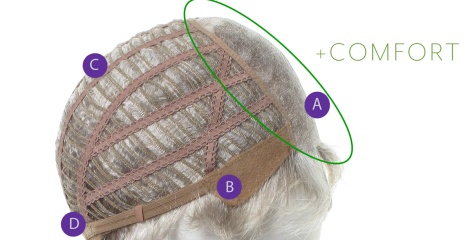
Monofilament caps use a sheer mesh so that your skin colour shows through and creates a natural scalp appearance. Matching wigs mimic natural hair growth, perfect for multidirectional styling to help you achieve a tousled look.

Lace front caps, as the name suggests, use a sheer lace front to create a natural-looking hairline and allow you to style your wig away from your face. As they can be parted anywhere, lace front wigs and caps offer endless styling options.

On hand-tied wigs, each individual strand of hair is expertly attached to a mesh cap to give the appearance of all-over natural hair growth. Skillfully crafted by hand, they are soft and light to wear. Plus, the closed nature makes this arguably the best wig cap to protect hair!

Wefted, capless or open-cap is the most basic type. The open construction makes this the best wig cap for beginners. With wefts of hair spaced across the wig cap, the hair moves as one and allows you to easily achieve a fixed and full style.
There are four common wig cap constructions, which all cater to different needs and complement different styles of wig. We look at each in detail in our complete guide, but here’s a quick run-down.
Ready to feel fabulous? Email us at [email protected] or give us a bell on 01484 844557. You can also arrange an in-person appointment at our Huddersfield shop, where our compassionate team are on hand to guide you through your wig-wearing journey!
CONTACT US
We would LOVE to hear from you. Our friendly Customer Services Team can be reached Monday to Thursday (9:30 am to 3:30 pm GMT, and Friday 9:30 am to 2:30 pm GMT).
Come and say hello!

THE AUTHOR
Hi, I am Emma. We began as our family was thrown into the world of hair loss, and we wanted to create a company where support, education, and hair loss options, were available together in one inclusive place










Comments (5)
Hi Jane. Thank you for your query. We would recommend you try a bamboo wig cap, which is super soft against your scalp. View Here If you have any further queries, please do get in touch with our fabulous customer service team here x
I dont know what wig cap to choose .had shingles on my head .so if l have stress it’s painful on times . My remaining hair is fine .so l need to feel secure with my wig .nylon wig cap slides off .please help
Thank you for this very informative article on different types of wig caps, and wig cap construction which is a very useful concise guide.
I have an incredibly sensitive scalp and find all wigs (regardless of construction) very itchy. So, I always wear a bamboo wig liner. This also helps with absorbing sweat, important in warm weather! Bamboo wig liners last for years so it is worth while investing in a few.
I’ve tried all sorts of wig caps over the years ….the velvet band one is ok but find as it’s thicker where the velcro overlaps ,my wig sticks up / out a bit at the back because of this ! I’ve bought a full head wig cap that has ear cut outs that seems to be doing the job . Its so important to wear one,especially in windy weather !
Leave a Comment