

How to Put on a Wig: The Beginner’s Guide



What's In This Article
Putting on a wig for the first time can feel a little unfamiliar. You might be wondering where to position the hairline, how to make your wig feel secure or whether you need to wear a wig cap. The good news is that with a little practice, putting on your wig can become a straightforward part of your daily routine.
To put on a wig, start by preparing your natural hair or scalp. Check the adjustable straps, gently place the wig over your head, position it at your natural hairline and align the ear tabs. Finally, adjust the fit at the nape until your wig feels comfortable and secure.
At Simply Wigs, we’ve been helping customers with their wigs since 2007. We know that the little details can make all the difference, so we’ve put together six simple steps to help you get started
Our easy to follow video.
Not sure where to start?
Before you read through our easy step-by-step instructions, check out our video below to see our lovely model demonstrate how easy it is to put a wig on!
How to Put on a Wig for Beginners: 6 Easy Steps
Step 1: Prepare Your Natural Hair or Scalp
Before putting on your wig, make sure your hair or scalp is ready. How you prepare will depend on how much natural hair you have.
If you have short hair – Brush your natural hair away from your face and towards the back of your head. If necessary, use a few hair grips to keep loose sections in place. The aim is to create a smooth surface so your wig sits evenly.
If you have long hair – Longer hair needs to be secured as flat as comfortably possible beneath your wig. You could use pin curls or two French plaits, crossed and secured near the nape. Try to avoid creating a large bun, as this can make the wig appear uneven. For a more detailed tutorial, take a look at our guide to wearing a wig with long hair.
If you have little or no hair – You may find that your wig fits comfortably directly against your scalp. Alternatively, a soft, breathable wig liner can provide an extra layer of comfort. If your scalp is particularly sensitive, choose materials that feel gentle against your skin and avoid unnecessary pressure.
Step 2: Decide whether to wear a wig cap
A wig cap can help keep natural hair flat beneath your wig and may provide a comfortable layer between your scalp and the wig construction. However, you don’t always need one. Some wig wearers prefer the feel of their wig directly against their scalp, while others find a soft, breathable liner more comfortable.
If you’re unsure, read our wig cap versus no wig cap guide or learn how to put on a wig cap.
Step 3: Check the wig before putting it on
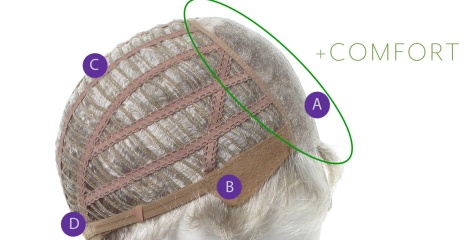
Hold your wig by the cap and locate the label at the back. This identifies the nape area. If your wig has adjustable straps, check their position before putting it on. Start with a comfortable adjustment rather than tightening them fully. Gently shake the wig if appropriate for its style and manufacturer’s care instructions. Take particular care around delicate lace-front and hand-tied areas. Avoid pulling on the fibres.
Step 4: Place the wig on your head
Tilt your head slightly forward and hold the wig securely by the cap. Position the front of the wig near your natural hairline, then gently bring the rest of the cap over your head towards the nape. Make sure the back of the wig sits comfortably at the nape of your neck.
Don’t worry if it isn’t perfectly positioned straight away. You can make small adjustments once the wig is on.
Step 5: Align the hairline and ear tabs
Once your wig is on, check its position in a mirror. The front edge should generally sit at your natural hairline, rather than too far down your forehead or too far back. Find the ear tabs on either side of the wig. These should sit evenly in front of your ears, without covering them. If one tab sits higher than the other, gently reposition the cap until both sides feel balanced.
Some wigs have a fixed parting, while others allow you to change the direction of the part. Always check your wig’s construction before adjusting the style.
Step 6: Adjust the straps and check the fit
Many ready-to-wear wigs have adjustable straps or tabs at the nape. If your wig feels loose, you may be able to tighten these slightly. If it feels uncomfortable or creates pressure, loosen them. Your wig should feel secure without being painfully tight.
Finally, look in the mirror from the front and sides. Check that the hairline looks natural, the ear tabs are even and the nape feels comfortable. If the wig moves excessively despite adjustment, the cap size or style may not be suitable. Rather than overtightening it, seek fitting advice.

Is Putting on a Lace Front Wig Different?
The basic fitting method is very similar, but lace-front wigs need a little extra care. A lace-front wig has a fine lace section along the front hairline, helping create a natural-looking finish. This lace can be delicate, so avoid pulling, stretching or folding it when putting on your wig.
Many ready-to-wear lace-front wigs arrive with the lace already trimmed. If yours has excess lace that needs cutting, follow the manufacturer’s instructions or seek specialist advice before making any alterations.
For more detailed advice, read our guide to putting on a lace front wig.
Common Mistakes to Avoid When Putting on a Wig
Even experienced wig wearers occasionally need to make adjustments. Here are a few things worth checking if your wig doesn’t feel quite right.
| Common mistake | What to do instead |
|---|---|
| Positioning the wig too far forward | Check where your natural hairline would sit |
| Leaving bulky natural hair underneath | Keep your hair as flat and comfortable as possible |
| Wearing uneven ear tabs | Gently centre the wig until both sides are level |
| Tightening the adjustable straps too much | Aim for a secure but comfortable fit |
| Pulling on delicate lace | Handle the wig gently by its cap |
| Wearing a wig that’s the wrong size | Check your head measurements and cap fit |
Frequently Asked Questions About Putting on a Wig
If you're new to wearing wigs, it's perfectly natural to have a few questions. Here are some of the things our customers often want to know.
- Do you need a wig cap to wear a wig?
-
No. Wig caps are optional for many ready-to-wear wigs. They can help keep your natural hair flat and provide an additional layer between your scalp and the wig. However, some people find their wig more comfortable without one.
- How do you put on a wig with adjustable straps?
-
Locate the adjustable straps inside the wig cap near the nape. Put on your wig, position the hairline and ear tabs, then make small adjustments to the straps if needed. The wig should feel comfortably secure without excessive pressure.
- How do you put on a wig with long hair?
-
Divide your natural hair into manageable sections and secure it as flat as possible using plaits or pin curls. You can then use a wig cap if preferred, before fitting your wig as normal.
- Can you put on a wig without glue?
-
Yes. Many ready-to-wear wigs are designed to be worn without glue. A correctly sized cap with adjustable straps may provide enough security, although you can consider suitable wig grips or other accessories if extra support is needed.
- How do you stop a wig from slipping?
-
First, make sure your wig is the correct size and positioned properly. Check the adjustable straps and ensure any natural hair underneath is secured evenly. If you still need extra security, a suitable wig grip or another appropriate securing method may help.
- How long does it take to get used to wearing a wig?
-
Getting used to wearing a wig is different for everyone. Some people feel comfortable after a few tries, while others prefer to practise at home over several days. Start with short periods, check that the wig fits comfortably and gradually build your confidence. If your wig causes discomfort, check the fit rather than trying to get used to unnecessary pressure.








Comments
No comments yet. Be the first!
Leave a Comment